
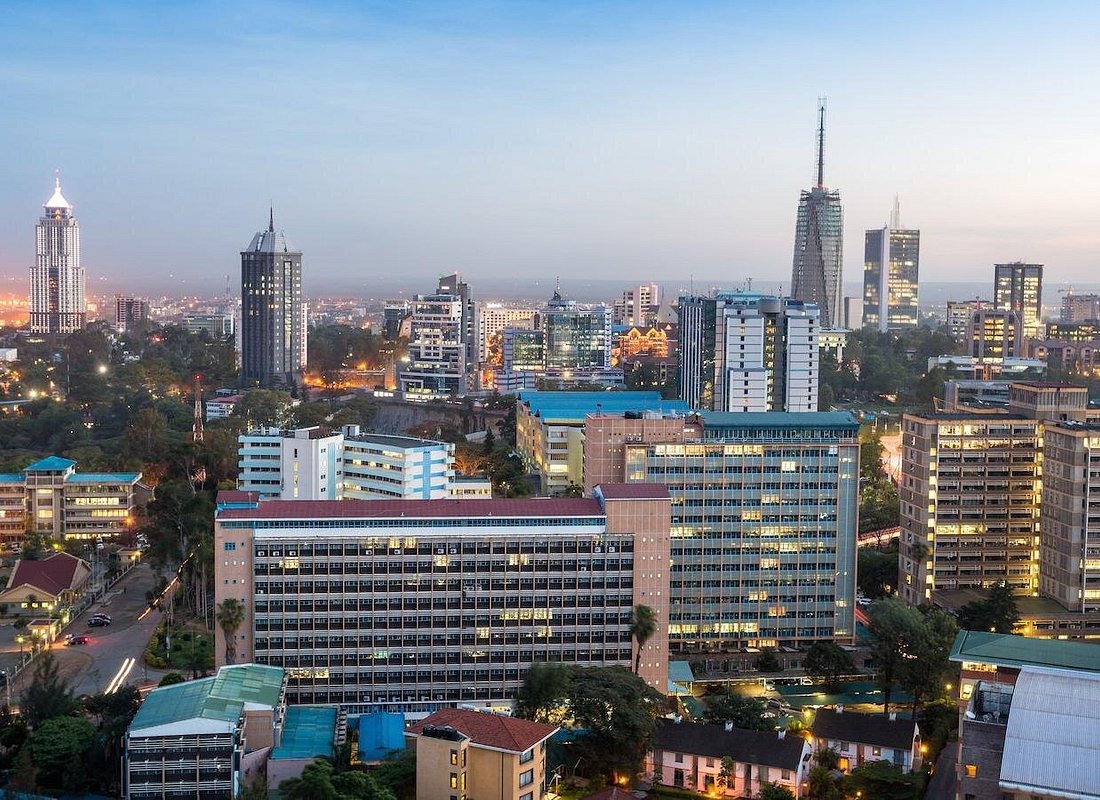
Imagine Nairobi in 2050. The city’s population has doubled. There are twice as many buildings, built rapidly and cheaply to accommodate all citizens. Industry has exploded. There are energy and water shortages, and the city’s aged infrastructure is straining under the pressure. The air is clogged with smog, seeping into offices and homes. Trees have been felled, green spaces bulldozed, and the grey hardscape that has sprawled in their stead radiates thick heat and toxic fumes.
This is the bleak outlook should we continue to build our city the way we do now.
But there’s an alternative. In contrast to this dystopian future, Nairobi and Kenya’s other cities can be transformed into sustainable, resilient, liveable spaces. And green buildings have the potential to do just that.
Green buildings are designed to minimize the impact they have on their environment. By designing and building smartly, they consume less energy and water, they harness energy from renewable sources, and they prioritise the well-being of their occupants. And they save money.
Imagine buildings that emit less carbon and use less power, alleviating the strain on the national power grid. Green buildings do this by employing a passive design – using the orientation and layout of the building to naturally heat and cool it, as well as cutting-edge technologies such as smart lighting systems and advanced insulation materials. Incorporating renewable energy sources like solar panels and wind turbines can turn buildings into power generators, meeting their own energy needs and supplying additional power to the grid.
Imagine buildings that use less water. Green buildings harvest rainwater, recycle wastewater and use low-flow fixtures. This way, they reduce the burden on Kenya’s lakes, rivers and groundwater and ensure there is enough water supply for the country’s growing population.
Imagine buildings in which the occupants live healthier and happier – office workers who are more productive, schools in which students study better, hospitals in which patients get discharged quicker. Green buildings are designed to let in enough natural light, to have great indoor air quality and comfortable temperatures. They use sustainable materials that emit fewer volatile organic compounds and implement effective ventilation systems.
Imagine buildings that have rooftop green spaces and vertical gardens. These green oases fight the heat absorbed and emitted by the city, they provide a sanctuary for wildlife and promote a more harmonious coexistence between humans and nature.
Imagine buildings that cost less money – money which can be used elsewhere.
So now re-imagine Nairobi in 2050 – the city’s population has doubled, and so have its buildings. But every citizen has more than enough clean water and electricity to live and work in dignity. You can sit in your office or classroom comfortably without an AC or heaters. You’re breathing clean air. The city is cool, even in the midday heat, and lush green spaces intersperse the urban jungle.
The vision for Kenya can be bright. What it takes is the will to make the changes now and begin transformimg our cities.
That is what we are at Urban Green Consultants (UGC) do. Our team of engineers and environmental experts has been spearheading the green building movement in Kenya for over 10 years having engaged in more than 100 building projects in the country as well as fourteen other African nations. Projects have spanned from large multinationals such as Google, Microsoft and Maersk to small and medium scale developers; from office buildings and factories to residential buildings and hospitals.
UGC uses early building simulation modelling to help architects and design teams optimize the performance of their buildings and save on operational costs. We then work with internationally recognized green building rating tools such as LEED and IFC EDGE to help the projects quantify and independently verify their performance. UGC proves that building green is not only good for the environment, but also good for business, and they need not be expensive. It’s about good early design choices. When we started, building green was considered niche and costly. Ten years later, there is an understanding in the market of both the strong need and great benefit of green buildings. We at UGC want to forge ahead even further: We envision a future in which buildings not only reduce their negative impacts and costs, but also have a positive, regenerative impact: producing excess renewable energy for the grid, sequestering carbon, providing clean water, recycling waste and helping improve biodiversity. We envision a future in which cities like Nairobi are attractive urban ecosystems. Where cities are a driver of change.

Leave a comment