
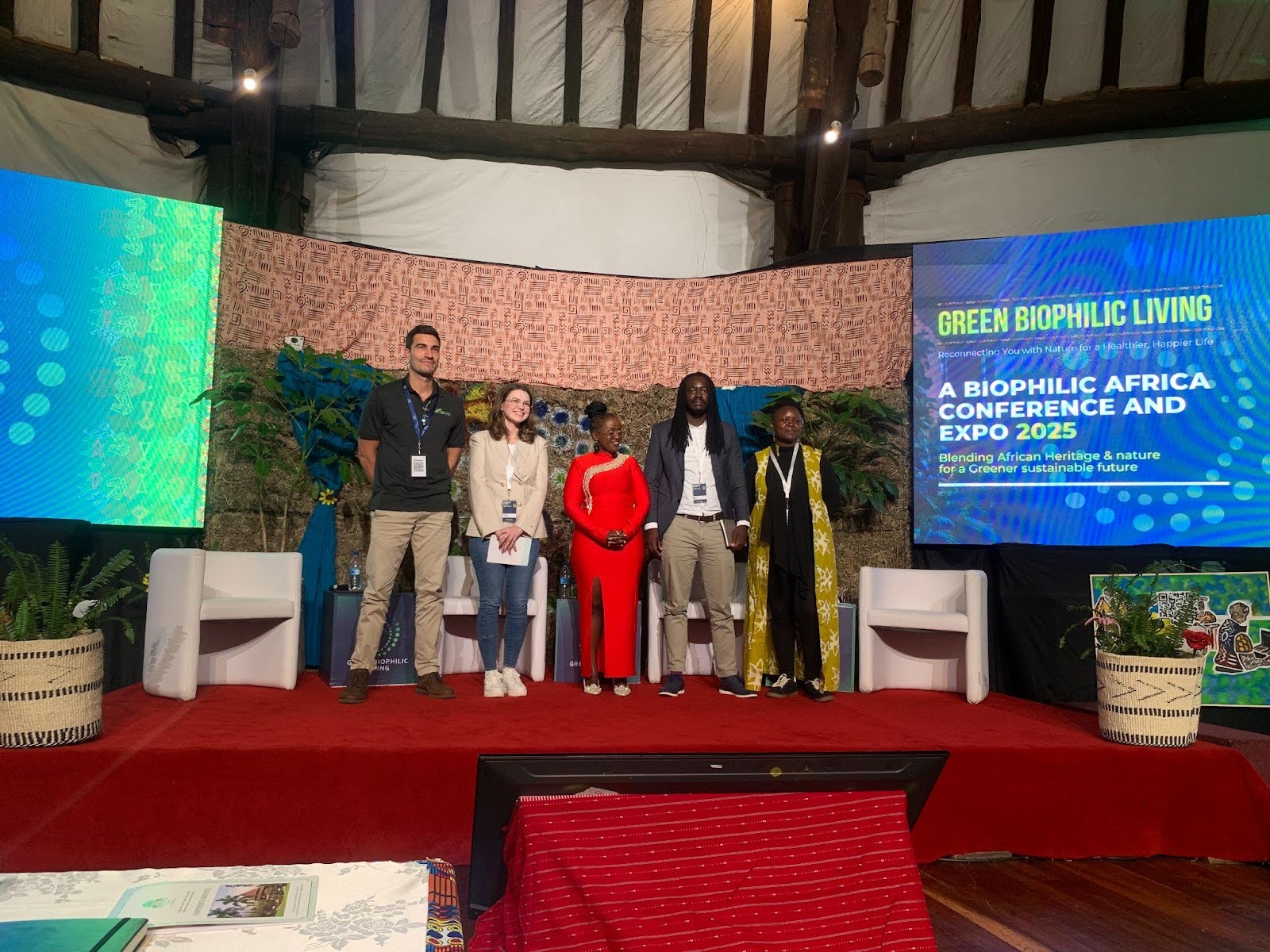
We were thrilled to have been invited to the Biophilic Green Building Conference held from May 15th to 16th, 2025, at Safari Park Hotel in Nairobi.
Biophilic design is about reconnecting people with nature through the built environment. It goes far beyond plants on walls. It includes daylight, natural materials, airflow, views, textures, and patterns that evoke a deeper sense of place and well-being.
At UGC Africa, we see biophilic design not just as beautiful, but essential, supporting healthier, more resilient and sustainable buildings. It complements the performance-driven work we do through certification systems like EDGE, LEED, WELL and others.
Biophilic design isn’t just a feel-good concept, it’s a vital part of the sustainability puzzle. As green building consultants, we recognize the strong alignment between biophilia and green building principles. While green buildings emphasize environmental performance, energy and water efficiency, waste reduction and indoor air quality, biophilic design brings in the human experience, promoting wellness, comfort and connection to nature. Together, they form a more holistic approach to sustainability.
The key takeaway from the conference was clear: biophilia must make business sense to become mainstream. Nature-based design needs to be seen not as an added cost, but as a strategic advantage. Strong policy support and market awareness are also essential to help shift demand.
So, what’s the business case for building green and biophilic?
Investing in green buildings, especially those that integrate biophilic principles, offers significant financial and non-financial returns. Globally, data continues to show the long-term value of sustainable design. Here are some of the core benefits:
Energy efficiency is a major driver. Green buildings typically consume 20% to 30% less energy compared to conventional buildings. These savings directly reduce utility costs and improve a building’s performance. When combined with biophilic strategies like natural light and ventilation, buildings can lower energy loads even further while enhancing indoor comfort.
Water use is another area of impact. Through efficient plumbing fixtures, smart irrigation, and water recycling, green buildings can reduce water consumption by 30% to 50%. Integrating natural elements like indoor gardens or constructed wetlands, further supports water efficiency by reducing a building’s water demand.
Green and biophilic buildings also tend to command higher property values. They attract and retain tenants more easily due to their lower operating costs, healthier environments and enhanced aesthetic appeal. Studies show that green-certified properties can see a value premium of 7% to 11% over their conventional counterparts.
These buildings don’t just look good, they feel good to work in. Biophilic design improves indoor environmental quality through natural light, views of greenery, fresh air and non-toxic materials. These features are closely linked to better health outcomes, reduced absenteeism, and improved cognitive function. Research suggests that productivity can increase by 2% to 16% in green and biophilic workspaces. This translates into real economic gains for businesses and a stronger case for investors.
Occupancy rates are also consistently higher in green-certified buildings. Tenants are more likely to stay in spaces that offer comfort, lower utility bills and enhanced wellness. This means more stable rental income and reduced turnover costs for developers and property owners.
Operating costs are typically lower by 30% to 50% in green buildings, thanks to reduced energy, water, waste and maintenance needs. Biophilic features like daylight harvesting, natural ventilation and natural durable materials also help extend the life of building systems and reduce long-term wear and tear.
Governments are increasingly offering tax breaks, rebates and grants to support sustainable construction. These incentives can offset initial costs and improve overall returns. At the same time, investors in green and biophilic properties are better positioned to meet future regulations on carbon and sustainability, avoiding costly retrofits and compliance risks.
Ultimately, integrating biophilic design into green buildings is not just about aesthetics or certification; it’s about creating spaces that are climate-resilient, human-centered and economically sound. The two approaches, green building and biophilia, are separate but complementary. When combined, they offer a compelling model for the future of sustainable real estate.
At UGC Africa, we are committed to helping clients realize this vision. By embedding nature and sustainability into every phase of the building process, we create spaces that deliver lasting value for people, the planet and profit.

Leave a comment