
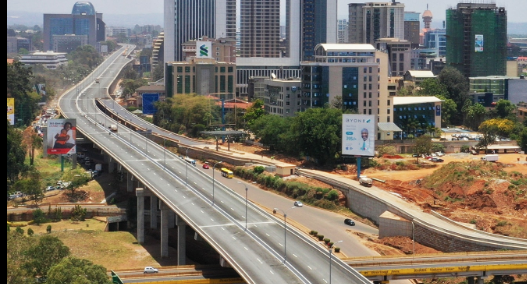
Across much of Africa, buildings are expected to perform reliably even though the conditions around them often fall outside what standard design practices account for. Inconsistent power supply, unscheduled water cuts, interrupted stormwater lines… Climate patterns are shifting faster than infrastructure is adapting across the region. At Urban Green Consultants (UGC), we strategize for this context. Green building advisory, in this setting, becomes a resilience strategy as much as a sustainability one. Green building is sometimes treated as a feature for markets with stable infrastructure but in reality, it matters more precisely where infrastructure isn’t stable.
INFRASTRUCTURE PRESSURE SHAPES THE BRIEF
In many developing markets, the very conditions green building standards are designed to improve, such as energy reliability, water supply and stormwater management, are the same conditions that determine whether a building can keep generating income without costly interruptions. A building designed without these realities in mind carries real exposure once it’s occupied. Advisory work at the early design stage is where this exposure gets addressed.
Take a common scenario: a commercial development sitting next to a highway undergoing expansion. Roadworks regularly cut electricity lines feeding the site. Heavy rains knock out power for hours at a time. Construction crews working on the road occasionally sever stormwater drains or municipal water pipes, leaving the building without supply until repairs are made. None of this is hypothetical for many sites across the region. It’s disruption that persists months into operation if it isn’t planned for at design stage.
GREEN BUILDING ADVISORY BUILDS RESILIENCE
Energy Independence
Energy modelling, efficient building envelopes and renewable integration such as rooftop PV with battery backup lower a building’s dependence on the grid. For a site next to that road expansion, this means continued operation when crews cut the line, not a full shutdown until the line is reconnected. For a developer, that’s an economic case as much as a green one. Kenya’s grid is already roughly 90% renewable, mainly geothermal and hydro (International Energy Agency), but a developer still pays full utility tariffs for every unit drawn from it and a line cut during roadworks stops that power regardless of how clean it is. Rooftop PV cuts what the building pays the for this utility each month and the battery keeps it running through an outage instead of waiting on the utility company to reconnect the line.
Water Security
Rainwater harvesting, on-site storage tanks and greywater reuse reduce a building’s reliance on municipal water supply. When roadworks sever the supply pipe feeding that same site, stored reserves keep toilets, cooling systems and kitchens running, buying time until the municipal connection is repaired.
Stormwater Management
When the road expansion changes drainage patterns or disrupts the stormwater system nearby, a building designed to manage its own runoff, through on-site storage and permeable surfaces for example, keeps functioning normally even while the municipal drains along that same road are under construction or blocked with debris.
Climate Resilience
Site planning and material selection account for flooding, heat stress and shifting weather patterns at the design stage. For a site like the one next to the road expansion, that means the building envelope and drainage are already sized for the heavier run-off and dust that roadworks and a changing climate bring, rather than needing costly retrofits once the damage happens.
Performance Assurance
Commissioning and ongoing monitoring confirm these measures perform as designed once the building is in use including under the exact disruptions the roadworks scenario creates, so the battery, the storage tanks and the drainage are proven to hold up under an actual line cut or a blocked drain, not just modelled to.
THE BUSINESS CASE
For developers, this is also a risk management conversation and the numbers make the case sharper. Retrofitting resilience into a building after handover typically costs more than designing it in upfront. Industry analysis puts the gap at up to 40% greater savings when energy and water measures are built into the original design rather than added later (Archylab, Building Cost Research). Compare that with the incremental cost of building it right the first time: IFC’s EDGE certification, which requires a minimum 20% reduction in energy, water and embodied carbon against a local baseline, has seen certified projects reach that threshold for a modest premium; one EDGE-certified maternity unit in Ghana added just 3% to construction costs and paid that back in four months through lower operating costs alone (EDGE Buildings, International Finance Corporation).
Set against that is the cost of doing nothing. Power interruptions cost African businesses an estimated 5% of annual sales on average, with firms across the continent losing more than 50 hours of power a month to outages (Oseni and Pollitt, Energy Economics). For a commercial tenant, even a single multi-hour cut during a roadworks incident means idle staff, spoiled stock in coolers and lost trading hours; costs a landlord ultimately absorbs through vacancy risk and renewal terms. In markets where infrastructural pressure is constant, resilience isn’t an added cost line; it’s what protects the income the building was underwritten to produce.
At UGC, this is the standard we bring to every advisory engagement. If your pipeline includes a site exposed to the kind of infrastructural pressure described here, get in touch to request an assessment. We will model the specific exposures for your site, benchmarked against standards like EDGE, before you’re locked into a design that can’t absorb them.

Leave a comment